Learn and Enjoy

Educative Blog
Mostrando entradas con la etiqueta gobex. Mostrar todas las entradas

miércoles, 16 de noviembre de 2016

Proyecto e-Twinning: Bird's Eye View into Our Classrooms

Over the course of the next few months we will share particular lessons that the students really enjoy in our classrooms. I would like to focus on Drama, Art & Sport. 


lunes, 17 de octubre de 2016

Food chain's levels:


Food chain has different levels:


    Producer.

    Herbivores (primary consumers).

    Carnivores (secondary consumers).

    Decomposers.


When one type of organism eats another, energy is passed from one level to another.


-Producers: use energy from the Sun to make their own food and act as a source of food for other organisms in an ecosystem.

-Consumers: obtain their energy by eating other living things. Herbivores- an animal that eats plants (grasshopper, cricket) the most number of insects are herbivores and there are big animals like giraffe, koala and the elephant. The energy from plants is eaten and used by herbivores. 1st level Consumer-Herbivores.

Carnivores- 2nd level Consumer, an animal that eats meat, lizard, dog, cat, and wolf. And there are other animals like the owl, lion and the tiger that are the 3rd level of Consumers and they are carnivores.


Third level Consumers eat Second Level Consumers


Animals that hunt and eat other animals are called predators; the animals that predators eat are called prey.


-Decomposers: are organisms that break down dead plants or animal matter and release the nutrients back into the soil. Decomposer such as bacteria, fungus and worms transfer energy to soil to make plants.


A food chain shows the feeding relationship between organisms and ecosystem.


Organisms are dependent on each other within a food chain.

lunes, 3 de octubre de 2016

UNIT 1: ECOSYSTEMS- 4th grade


Ecosystems are communities of organisms that interact with each other and with their physical environment.

Ecosystems have living (biotic) and non living (abiotic) components.

Abiotic= non-living: rain, sunlight, temperature, minerals in the soil.

Biotic= living: Animals-Consumers, Plants-Producers and Bacteria-Decomposers.

Biotic and Abiotic factors work together for an ecosystem to survive and flourish.


Play the video
Play the video

miércoles, 21 de octubre de 2015

Partes de la planta

Estigma: Es la parte superior del pistilo y por donde entran los granos de polen.

Pistilo: Es el cuello del estigma.

Ovarios: Es el lugar donde se desarrolla la semilla.

Pedúnculo: Es lo que une la flor con el tallo.

Sépalo: Son las hojas del cáliz, generalmente de color verde.

Pétalo: Son las hojas de la corola, generalmente de colores llamativos para atraer a los insectos.

Filamento: Es la parte del estambre que sujeta a la antera.

Antera: Es la bolsa en la que se encuentran los granos de polen.

viernes, 16 de octubre de 2015

miércoles, 1 de julio de 2015

Summer Holidays


Ntra. Sra. de Guadalupe School had closed for the summer holiday at 12noon on Friday 19th June. This has been a great year for our students with numerous achievements both in school and out of school – we have fantastic students who we are very proud of! Enjoy the holidays and we’ll see students back in school on Monday 14th September at 9.00am.

jueves, 21 de mayo de 2015

Fotos de la visita del Emprendedor Michel Dunn

El pasado 11 de mayo, el empresario estadounidense Michel Dunn, con domicilio en Don Benito y empresario de TECNOAGI S.L., estuvo en el colegio explicando cómo era su trabajo y cómo se desarrollaba la empresa.


lunes, 20 de abril de 2015

Beneficios del bilingüismo

Según Mª América Pérez Invernón, en su estudio de "Evaluación de programas bilingües", Las ventajas que obtiene un niño cuando es bilingüe se organizan en cognitivas y sociales. 


La mayor parte de los hallazgos de la investigación sugiere que los bilingües son superiores a los monolingües en lo que a pensamiento divergente o creativo se refiere (Baker, 1988 en Baker, 1993:173). La hipótesis que asocia pensamiento creativo y bilingüismo dice que la propiedad de dos o más lenguas puede aumentar la fluidez, la flexibilidad, la originalidad y la elaboración en el pensamiento. A este respecto, Ortí (1988:42) después de considerar numerosos estudios (Okoh, 1989; Ekstrand, 1980; Torrance, Gowan, Wu, Aliotti, 1970; Ben-Zeev, 1977; Scott, 1973; Carriger, 1974; Cummins y Gulutsan, 1974) resume que las ventajas cognitivas ligadas al desarrollo bilingüe parecen indicar que éstas se encuentran al nivel de las tareas creativas y que por su experiencia en el lenguaje, el niño bilingüe desarrollaría una creatividad mayor comparado con su homólogo monolingüe.

viernes, 17 de abril de 2015

JUNIOR EMPRENDE 2014/2015

Otro curso más se trabaja en el cole el proyecto de JuniorEmprende, este curso no he podido participar por un permiso de maternidad pero las compañeras del centro se han sumado al proyecto y lo han trabajado con los alumnos de 5º y 6º.

Aquí os dejo el trabajo que me han pasado a modo de Memoria.


lunes, 2 de marzo de 2015

CONVOCATORIA INMERSIONES LINGÜÍSTICAS (INGLÉS) ALUMNADO 5º y 6º Primaria, E.S.O y Bachillerato VERANO 2015

RESOLUCIÓN de 24 de febrero de 2015, de la Secretaría General de Educación, por la que se convocan, durante el verano de 2015, inmersiones lingüísticas en lengua inglesa en Extremadura para el alumnado extremeño de 5º y 6º de Educación Primaria, Secundaria obligatoria y Bachillerato de centros sostenidos con fondos públicos al amparo del Programa de Inmersiones lingüísticas del alumnado de enseñanzas no universitarias obligatorias y postobligatorias de Extremadura (PILEx), cofinanciado por la Consejería de Educación y Cultura del Gobierno de Extremadura y el Fondo Social Europeo 2014-2020, y se establecen los requisitos, criterios de prioridad y procedimiento de adjudicación de las mismas.

RESOLUCIÓN Inmersiones alumnado extremeño verano 24-5-15

TRÍPTICO INFORMATIVO inmersiones alumnado extremeño verano 2015

jueves, 30 de octubre de 2014

Halloween at school

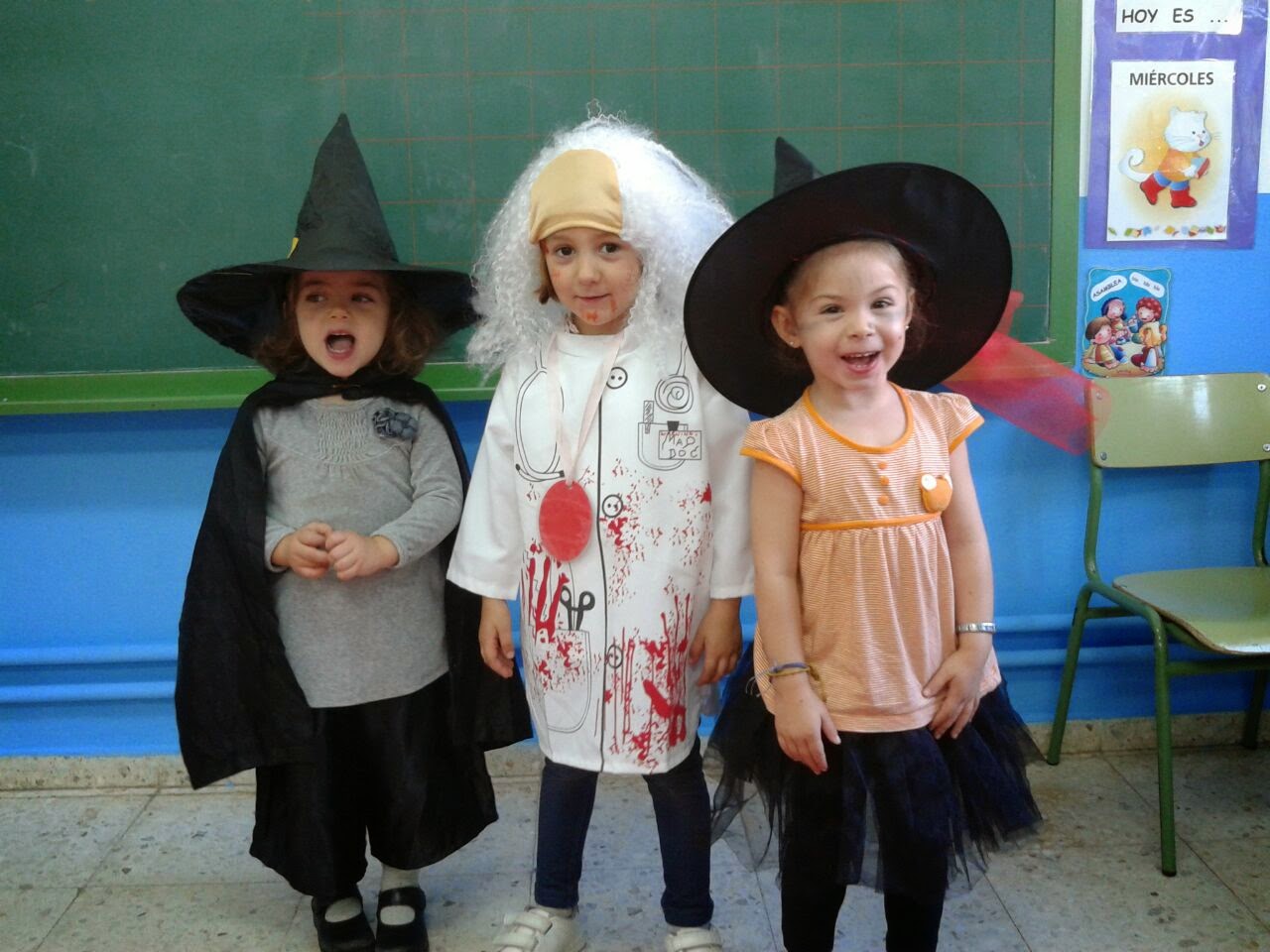
If you spotted any spooky creatures on the Pilones Street today they were probably heading for Ntra. Sra. de Guadalupe school. Witches ,vampires, skeletons, spiderman ,hulks, zombies and lots of other weird and wonderful creatures  gathered in the school hall . There was singing ,dancing, music,poems in English. 

Feast your eyes on some of these photos. Happy Halloween and stay safe as you TRICK OR TREAT!


HALLOWEEN TIME!!!!

http://www.educa.jcyl.es/educacyl/cm/gallery/Recursos%20Infinity/tematicas/halloween/wanda_cast/home.html